Baker’s Percentages Beyond Hydration
Use flour as the 100% reference, calculate salt and yeast, scale to a target dough weight, and account for flour and water hidden inside a preferment.
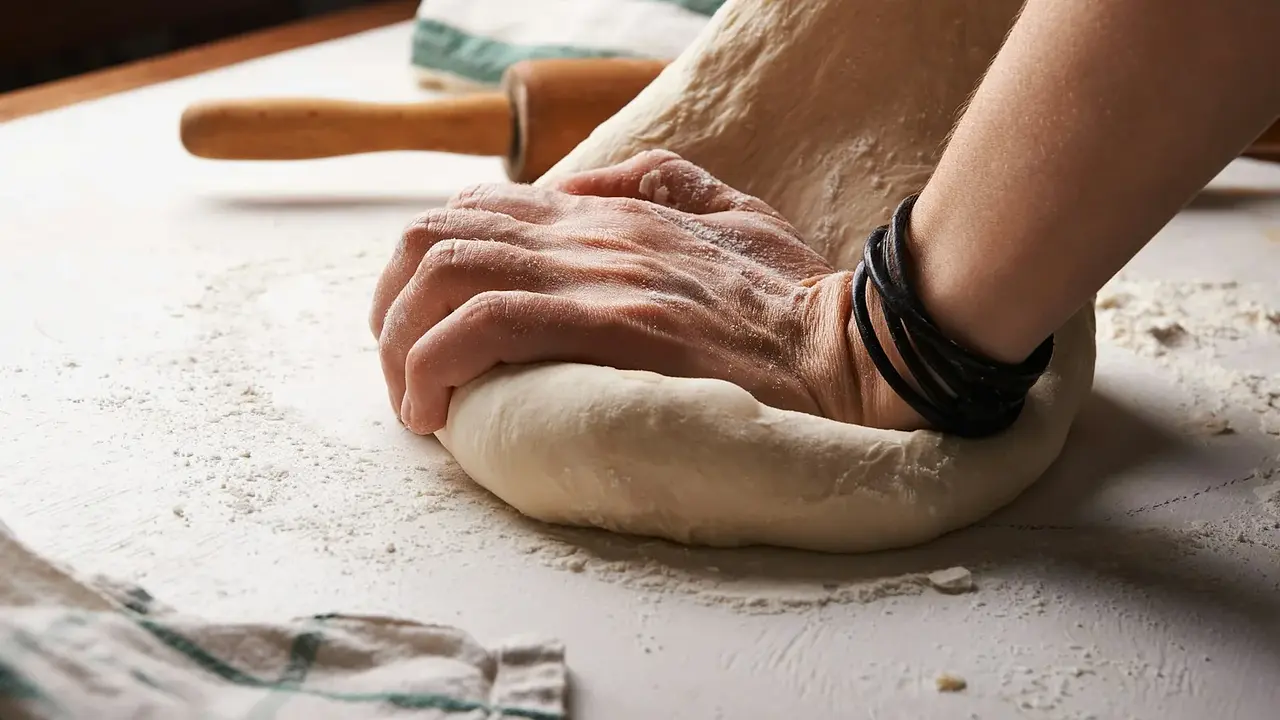
Hydration is the baker’s percentage most people meet first, but the same system describes every ingredient in a dough. Flour is the 100% reference, and water, salt, yeast, sugar, and fat are each expressed as a percentage of total flour weight. That makes formulas easier to compare and scale than a list of fixed amounts.
Use the utilkit Bread Calculator to explore flour, water, salt, and leavening percentages. Remember that baker’s percentages do not add to 100%. Each ingredient is divided by flour, so the total formula commonly exceeds 100%.
Convert a formula into percentages
For a dough with 500 grams flour, 350 grams water, 10 grams salt, and 2 grams yeast, flour is 100%, hydration is 70%, salt is 2%, and yeast is 0.4%. Divide each ingredient weight by 500 grams and multiply by 100.
These values communicate structure immediately. Two 500-gram loaves can behave differently if one uses 60% water and the other 80%. Salt and yeast percentages help explain fermentation and flavor, while enrichments change tenderness and handling.
Scale from a target dough weight
Add the formula percentages: 100 + 70 + 2 + 0.4 = 172.4%. Divide the desired dough weight by 1.724 to find flour weight. For 1,000 grams of dough, flour is about 580 grams; multiply that by each decimal percentage to calculate the other ingredients.
King Arthur Baking’s detailed baker’s percentage reference demonstrates this formula conversion factor. Keep extra precision through the calculation, then round to amounts your scale can reliably measure.
Unpack preferments for the overall formula
A poolish, biga, levain, or old-dough preferment contains flour and water that belong in the total. If you list a 100% hydration starter only as one ingredient, the main dough can appear much drier than it really is. Split the preferment into its flour and water contributions and add them to the final mix totals.
For 200 grams of 100% hydration starter, count 100 grams flour and 100 grams water. Overall hydration is total water from every stage divided by total flour from every stage. Also distinguish “percent preferment” by total preferment weight from “percent pre-fermented flour,” because they are not the same measure.
Use percentages to control one change
- Compare formulas independent of batch size.
- Scale dough to a pan, mixer, or loaf target.
- Adjust hydration while holding salt and flour constant.
- Track flour and water across preferment and final dough.
- Record actual dough temperature, fermentation, and results beside the formula.
Keep a formula worksheet for each bake
Give every ingredient a weight and percentage, then add process fields the percentages cannot capture: flour type, dough temperature after mixing, room temperature, mix method, bulk duration, folds, final-proof cues, pan or banneton size, bake profile, and finished loaf weight. Record planned and actual values separately. The difference between them often explains more than the formula alone.
When a preferment is involved, keep both the preferment build and total-formula view. The build tells you what to mix; the total formula lets you compare hydration, salt, and inoculation across breads. Also note how much preferment was retained or discarded, because a mathematically correct build can still leave too little ripe preferment for the final dough after transfer loss.
Evaluate the result with specific observations: dough strength at each fold, fermentation speed, shaping tension, crumb, crust, flavor, and staling. Change one principal variable for the next test and write the reason. A structured worksheet turns “this loaf was better” into evidence such as “the lower hydration made shaping cleaner without tightening the crumb,” which is actionable when you scale or repeat the formula.
Percentages describe quantities, not the whole baking process. Flour absorption, temperature, mixing, fermentation, shaping, and baking still determine the loaf. Use baker’s math to make the formula repeatable, then change one variable at a time and keep notes that connect the numbers to the dough you actually handled.