Dimensional Analysis: The Safest Way to Convert Units
Arrange conversion factors so unwanted units cancel, catch inverted ratios, and keep precision and temperature conversions under control.
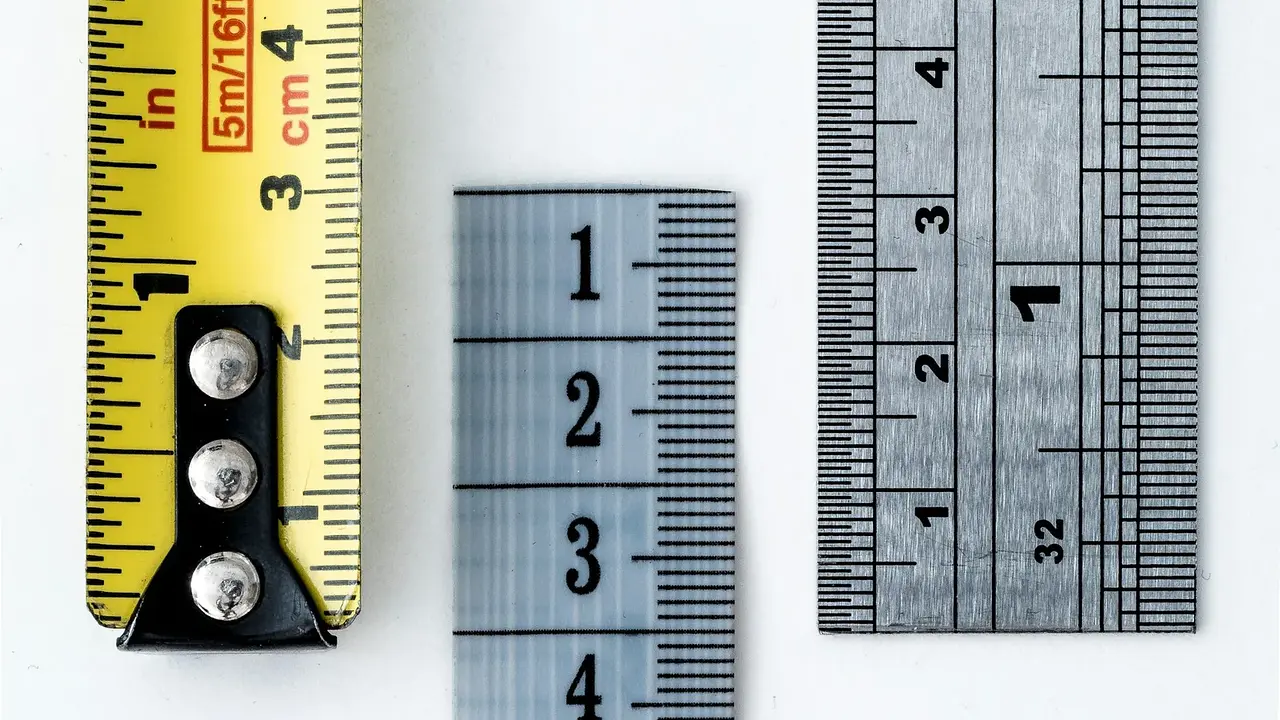
Unit conversion becomes safer when units are treated like algebra rather than labels attached at the end. Dimensional analysis multiplies a quantity by conversion factors arranged so the original units cancel and the desired units remain. The written chain shows the logic, which makes an upside-down factor easier to catch.
Use the utilkit Unit Converter for quick results, then write the factor chain when the conversion influences a lab, dose, engineering calculation, or expensive purchase. A tool can return a number; dimensional analysis shows whether you asked the right conversion.
Build factors from equal quantities
Because 1 inch equals 2.54 centimeters, both 2.54 cm / 1 in and 1 in / 2.54 cm equal one. To convert 12 inches to centimeters, multiply by the first form so inches cancel: 12 in × 2.54 cm / 1 in = 30.48 cm.
For several steps, continue the chain. Miles per hour to meters per second requires distance and time conversions. Arrange each factor before touching the calculator, cancel units on paper, and verify that only meters per second remain. OpenStax’s treatment of measurement demonstrates this factor-label method and its relationship to significant figures.
Convert compound and powered units completely
Area and volume require the linear conversion factor to be squared or cubed. One square meter is not 100 square centimeters; because each side contains 100 centimeters, the area contains 10,000 square centimeters. Write (100 cm / 1 m)² so the exponent applies to both the value and unit.
Rates contain numerator and denominator units. Fuel economy, density, price per weight, and data transfer speed may require converting both. Keep the full unit expression visible until the end rather than converting numbers in isolated steps and hoping they recombine correctly.
Recognize conversions that are not simple factors
Temperature scales with different zero points need an offset as well as a scale factor. Celsius to Fahrenheit uses a formula, not multiplication by one equivalence ratio. Calendar months also have variable lengths, and currencies use time-sensitive market rates. Identify these exceptions before applying cancellation mechanically.
Preserve sensible precision
Use exact defined conversions without rounding them mid-calculation, and keep guard digits until the final answer. Then round to a precision justified by the original measurement. NIST’s Guide for the Use of the International System of Units is a primary reference for SI notation and unit practice.
- Write the starting value with its unit.
- Choose factors from known equalities.
- Orient every factor so unwanted units cancel.
- Apply exponents to area and volume conversions.
- Check for offsets, variable definitions, and time-sensitive rates.
- Round once, at the end, with the unit attached.
Audit a compound conversion line by line
Suppose fuel use is reported as 8 liters per 100 kilometers and you need liters per kilometer. Write it as 8 L / 100 km, then simplify to 0.08 L/km. If the next step needs milliliters per mile, multiply by 1,000 mL / 1 L and by the number of kilometers in a mile. Every unit should cancel except mL/mile; if km remains, the setup is incomplete.
Do not invert a rate merely because the destination uses different words. Fuel economy in distance per volume is the reciprocal of fuel consumption in volume per distance, so converting between them requires inversion as well as unit factors. Write the requested unit before calculating and compare dimensions. This prevents treating miles per gallon and liters per 100 kilometers as if they increase in the same direction.
For important engineering, laboratory, or safety work, record the source value, original unit, conversion factors, significant figures, and rounding rule. Use constants from an appropriate standards source and have another person or validated system check the result. Dimensional analysis exposes setup errors, but it cannot tell whether the starting measurement, chosen constant, or physical model is correct.
A quick magnitude check completes the process. Converting kilometers to meters should make the number larger; converting centimeters to meters should make it smaller. Unit cancellation proves the dimension, while a magnitude check catches a misplaced decimal. Together they make conversions both explainable and hard to invert.