Recipe Scaling That Works: The Math—and the Exceptions
Calculate a recipe scaling factor, convert awkward amounts, and know which ingredients, pans, and cooking times need judgment instead of simple multiplication.
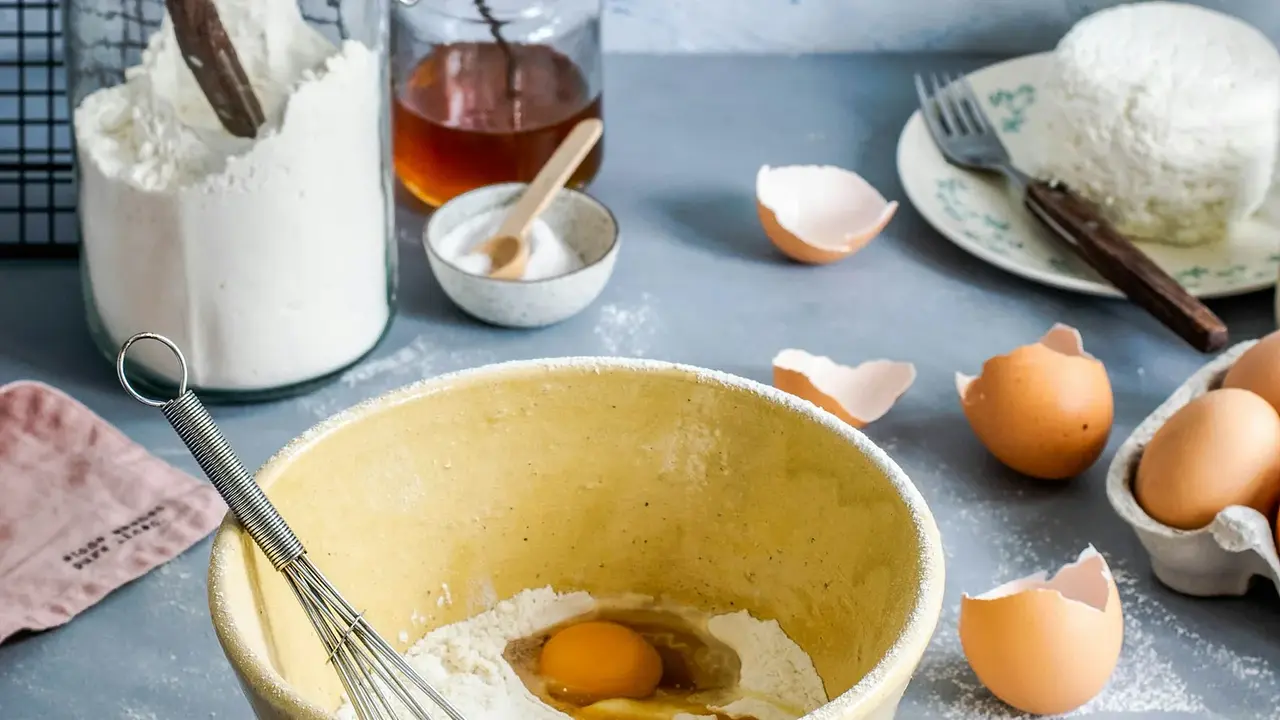
Recipe scaling begins with simple multiplication, but a successful larger or smaller batch depends on more than arithmetic. Ingredient quantities scale predictably; pan geometry, heat transfer, seasoning, leavening, and cooking time do not always follow the same factor. The useful skill is knowing which parts to calculate and which parts to verify with your senses.
Use the utilkit Recipe Ingredient Scaler to multiply every amount consistently. The core conversion factor is desired yield divided by original yield. A recipe that serves 6 and needs to serve 15 has a factor of 2.5, so each listed amount starts at 2.5 times the original.
Convert before you round
Keep full precision while calculating, then convert inconvenient results into units you can measure. For example, 2.5 tablespoons may be easier to measure as 2 tablespoons plus 1½ teaspoons. When accuracy matters—especially in baking—measure by weight. Virginia Tech’s recipe-writing guidance notes that weight is generally more precise than volume.
Avoid converting volume to weight with a generic factor unless you know the ingredient’s density. A cup of flour does not weigh the same as a cup of sugar or water, and even flour changes with the measuring method. Use a source specific to the ingredient or weigh the quantity in the original recipe once and record it.
Scale the container, not only the batter
A doubled cake recipe baked in the original pan becomes deeper, so the center takes longer to heat while the edges continue cooking. Try to preserve batter depth by using more pans or a pan with proportionally larger area. For a rectangular pan, compare length × width; for a round pan, compare the square of the radius. Exact geometry is less important than keeping the depth reasonably close.
Soups, sauces, and braises are more forgiving, but the pot still needs enough room for stirring and evaporation. A wider pot may reduce liquid faster. A crowded roasting tray steams instead of browning. Scale the cooking surface and equipment capacity along with the ingredient list.
Treat potent ingredients as a starting estimate
Salt, chile, smoke flavor, extracts, thickeners, and some spices can become overwhelming in a large batch. Start below the exact scaled amount when the ingredient can be adjusted late, then taste and add more. Do not apply that strategy casually to baking salt, leavening, or ingredients that affect structure; use a tested larger formula when the stakes are high.
Cooking time usually does not multiply by the recipe factor. Watch temperature, texture, color, and doneness signals from the original recipe. Start checking near the original time when portions and depth are unchanged, and allow extra time when the food is thicker, colder, or more crowded.
A repeatable scaling workflow
- Calculate desired yield ÷ original yield.
- Multiply every ingredient before rounding any result.
- Convert awkward measurements and prefer weights where practical.
- Choose pans that preserve the original depth and spacing.
- Use the original doneness cues rather than multiplying cooking time.
- Record the final quantities and timing after the first test.
Run a small test when the batch matters
If you are scaling for a wedding, fundraiser, or production day, do not make the event batch your first experiment. Scale one intermediate batch using the planned ingredients and equipment. Record the actual yield by weight or count, the usable capacity of the mixer and pans, the time each stage took, and any loss from trimming, evaporation, or transfer. That test turns a theoretical factor into an operational recipe.
For example, a cookie recipe advertised as 24 portions may produce only 21 at your chosen scoop size. A five-times batch based on the label promises 120 cookies but may yield 105. If you need 120 finished cookies plus a buffer, calculate from the observed 21-cookie yield and plan six batches or adjust the dough target. Yield evidence is more useful than pretending the original serving count is exact.
Also check whether the workflow scales. A home mixer may hold twice the dough but struggle to develop it evenly; a refrigerator may not cool a deep container quickly; and six sheet pans may exceed the oven’s useful airflow. Split large quantities into repeatable sub-batches when capacity or food-safety timing becomes uncertain. Label the tested version with ingredient weights, equipment, pan size, portion size, timing range, and observed yield so the next cook can reproduce the result.
The National CACFP Association’s culinary math guide calls this the factor method. Its arithmetic is deliberately simple. The craft lies in carrying that factor through the whole cooking system, testing what cannot be predicted, and turning a successful adjustment into a reliable new version of the recipe.