What Bread Hydration Percentage Should You Use?
Choose a hydration range for sandwich bread, sourdough, bagels, focaccia, ciabatta, pizza, and more—then adjust it for your flour and technique.
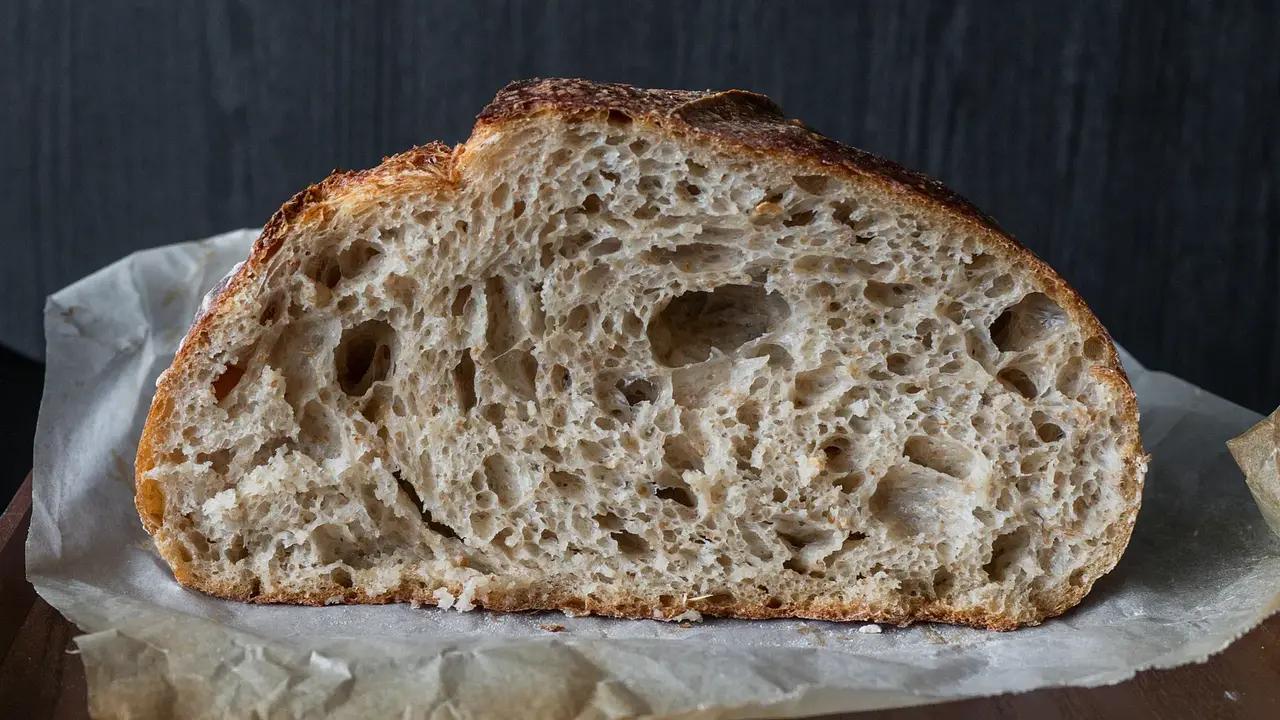
There is no single best hydration percentage for bread. A firm bagel dough and a bubbly focaccia need very different amounts of water, and two flours can make the same percentage feel surprisingly different.
The useful question is not “What is the perfect hydration?” It is “What range gives this style of bread the texture and handling I want?” Use the ranges below as starting points, then let the dough tell you whether it needs a small adjustment.
What hydration percentage means
Bread hydration is the weight of water divided by the weight of flour, multiplied by 100. A dough made with 500 grams of flour and 350 grams of water is 70% hydration:
350 g water ÷ 500 g flour × 100 = 70% hydrationHydration is a baker's percentage, so flour is always the 100% reference point. The percentages in a bread formula do not need to add up to 100. The utilkit Bread Calculator can turn a hydration percentage into ingredient weights and scale the complete formula to the flour weight or total dough weight you need.
Count water contributed by a liquid preferment or sourdough starter too. For example, 100 grams of a 100%-hydration starter contains 50 grams of flour and 50 grams of water. Both belong in the total hydration calculation.
Quick bread hydration guide
These are home-baking ranges, not rules. Start near the lower end when you are learning a new dough, using lower-protein flour, or shaping by hand. Move upward when the flour can absorb more water and the bread benefits from a softer, more open structure.
Very firm doughs: 45% to 58%
- Crackers and some crisp flatbreads: 45% to 55%. Low water helps the dough roll thin and bake crisp.
- Bagels: 50% to 58%. A good first target is 55%. The firm dough supports a dense, chewy crumb and holds its shape during boiling.
- Soft pretzels: 52% to 60%. Start around 56% to 58% for dough that is smooth, firm, and easy to twist.
- Stiff biga: 50% to 60%. This is the hydration of the preferment itself, not necessarily the finished bread. The American Society of Baking's biga reference describes the same traditional range.
Easy-to-handle doughs: 58% to 68%
- Neapolitan pizza: 55% to 62%. The current Verace Pizza Napoletana guidance uses roughly 1.6 to 1.8 kilograms of flour per liter of water, which works out to about 55% to 62% hydration. Try 60% as a manageable starting point.
- New York-style and general home-oven pizza: 60% to 65%. Start around 62% for dough that stretches without becoming overly sticky. A longer, cooler bake usually benefits from a little more water than a very hot Neapolitan bake.
- Sandwich and pan bread: 60% to 68%. About 64% to 66% is a useful starting point for a white loaf with a soft, even crumb.
- Dinner rolls and burger buns: 60% to 68%. Start near 65%, then account for milk, eggs, butter, or oil separately because enriched doughs do not behave like lean flour-and-water doughs.
- Everyday French bread: 62% to 68%. This range balances a crisp crust and moderately open crumb with straightforward mixing and shaping.
Moderately wet doughs: 68% to 78%
- Baguettes: 65% to 75%. Start around 68% to 70%. More water can encourage a more open crumb, but clean shaping becomes harder.
- Country sourdough and rustic boules: 68% to 78%. About 72% is a forgiving first target with bread flour. Move toward 75% or higher after you can build strength and shape the dough consistently.
- Whole-wheat bread: 70% to 80%. Bran and whole-grain particles absorb more water, so the number may look high while the dough still feels firm. The American Society of Baking gives a 72% whole-wheat formula as one real-world reference.
- Rye-blend bread: 65% to 80%. A loaf with a modest amount of rye may sit near the lower end; more rye often needs more water but will feel sticky rather than stretchy.
- Pan pizza, Sicilian-style pizza, and Detroit-style pizza: 65% to 75%. Start around 70%. The pan supports the softer dough, while the extra water helps produce a light interior during a longer bake.
- Ciabatta: 75% to 80%. A 76% formula is used in King Arthur Baking's professional ciabatta reference. Expect folding and gentle handling rather than conventional kneading and tight shaping.
High-hydration doughs: 75% to 100% and beyond
- Focaccia: 75% to 90%. Start around 80%. The pan contains the wet dough, and careful folding can build enough strength for a light, bubbly crumb.
- Roman-style pan pizza: 75% to 85%. Strong flour, good gluten development, and gentle handling are important as hydration rises.
- High-hydration artisan sourdough: 78% to 85%. This range can produce a moist, irregular crumb, but it does not guarantee large holes. Fermentation and shaping still matter.
- Pan de Cristal: about 100%. This specialty bread uses equal weights of flour and water. King Arthur's Pan de Cristal formula is a clear example of a 100%-hydration dough that begins almost like batter.
Why the same hydration can feel different
Hydration is a useful comparison, but it cannot describe the dough by itself. The King Arthur hydration guide notes that whole-grain flour is generally thirstier than white flour, and high-protein bread flour can usually take more water than lower-protein all-purpose flour.
Freshly milled flour, rye, seeds, cracked grains, and fiber-rich additions can absorb water slowly. A dough that seems wet immediately after mixing may firm up after a 20- to 30-minute rest. Temperature matters too: warm dough often feels softer and stickier than cool dough at the same hydration.
Technique changes the result as well. Folding develops strength in wet dough. Fermentation makes dough more extensible, but fermentation that goes too far can leave it slack and difficult to shape. Higher hydration is not automatically better bread; it is one variable in the formula.
Milk, eggs, butter, and starter need context
For lean dough, counting water is simple. Enriched breads are less tidy. Milk is mostly water, while eggs and butter contain both water and other components that soften or strengthen the finished bread. Two brioche or challah formulas can show the same listed hydration and still handle differently because their egg, fat, and sugar percentages differ.
Use hydration to compare similar formulas, not unrelated breads. The Bread Calculator counts water and milk as hydration liquids. It treats starter, leaven, and poolish as 100%-hydration preferments, so half their weight counts as flour and half as water. Eggs and butter remain separate ingredients rather than being converted into hidden water estimates.
How to choose your starting percentage
- Choose the bread style. Find its range above and begin near the middle or lower end.
- Consider the flour. Reduce the starting hydration slightly for lower-protein flour. Increase it cautiously for strong bread flour or thirsty whole grains.
- Consider the support. A loaf pan or sheet pan can contain softer dough that would spread as a free-standing boule.
- Change one thing at a time. Adjust water by 2% to 3% of flour weight on the next bake. With 500 grams of flour, a 2% change is only 10 grams of water.
- Record the result. Note the flour, hydration, dough temperature, fermentation time, and how the dough handled. Those notes are more useful than chasing somebody else's perfect number.
Turn the percentage into a complete dough
Once you have a starting point, open the Bread Calculator. Set flour to 100%, enter the hydration percentage for water, and add salt, yeast, starter, milk, oil, or other ingredients as needed. You can scale from flour weight or total dough weight, then divide the result into loaves, rolls, buns, or pizza balls.
If you are starting with a conventional recipe written in cups or mixed units, use the Recipe Ingredient Scaler when you only need to change its yield. Use the Bread Calculator when you want to understand or preserve the formula as baker's percentages.
For a first attempt, favor a dough you can handle confidently: roughly 55% for bagels, 60% for Neapolitan pizza, 65% for sandwich bread, 70% for pan pizza, 72% for country sourdough, 76% for ciabatta, or 80% for focaccia. From there, small measured changes will teach you more than any universal chart can.